We walk towards the castle of Serravalle, in Prato di Giovellina
I have been wanting to go and have a closer look at the Castle of Serravalle for a while now. In fact, it was during a trip to Tuscany that a stop in the beautiful village of Serravalle Pistoiese reminded me that, among all the things I had yet to discover on my island, there was the castle of the ancient “Pieve di Giovellina”. Thoughts are strange sometimes, aren’t they?
This article is a translation and adaptation of an Italian version, written by me, for the online journal Corsicaoggi.com. If you are (also) an Italian speaker, this is the best site to know everything about Corsica.
A good reason to discover center Corsica off the beaten track
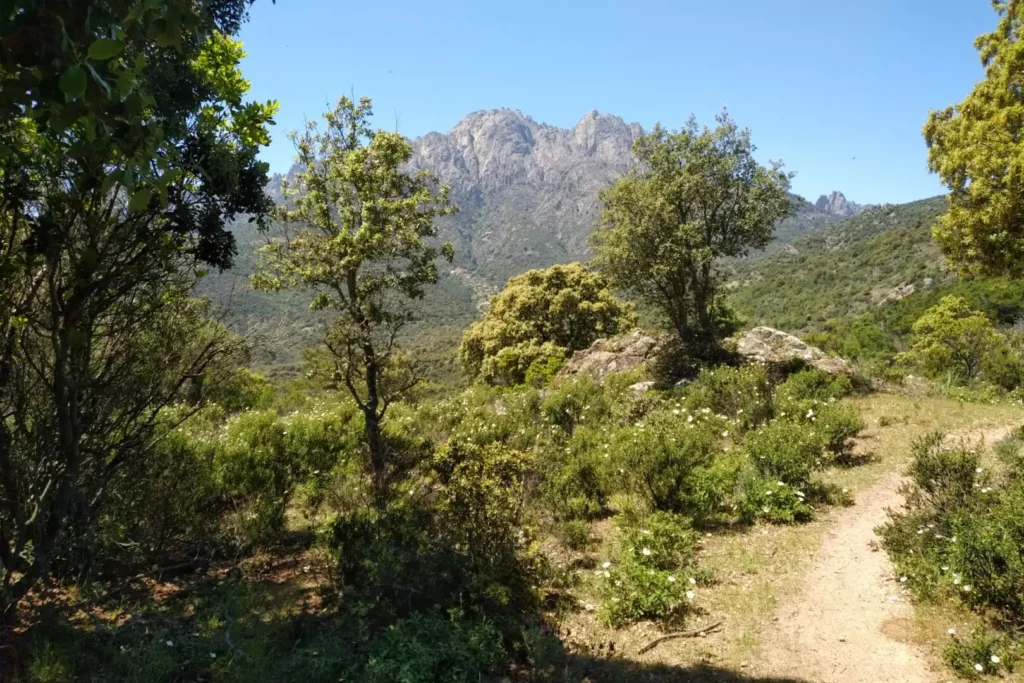
We are in the center of Corsica, not far from Corte, in the north of the municipality of Prato di Giovellina. As we follow the road heading towards the mountains at the southern exit of Ponte-Leccia, signs indicate that we are going towards the villages of Piedigriggio, Popolasca, and Castiglione. The area is quiet, still very wild. I note with some pleasure that since my last visit there (about twenty years ago!) the landscape has not changed that much.
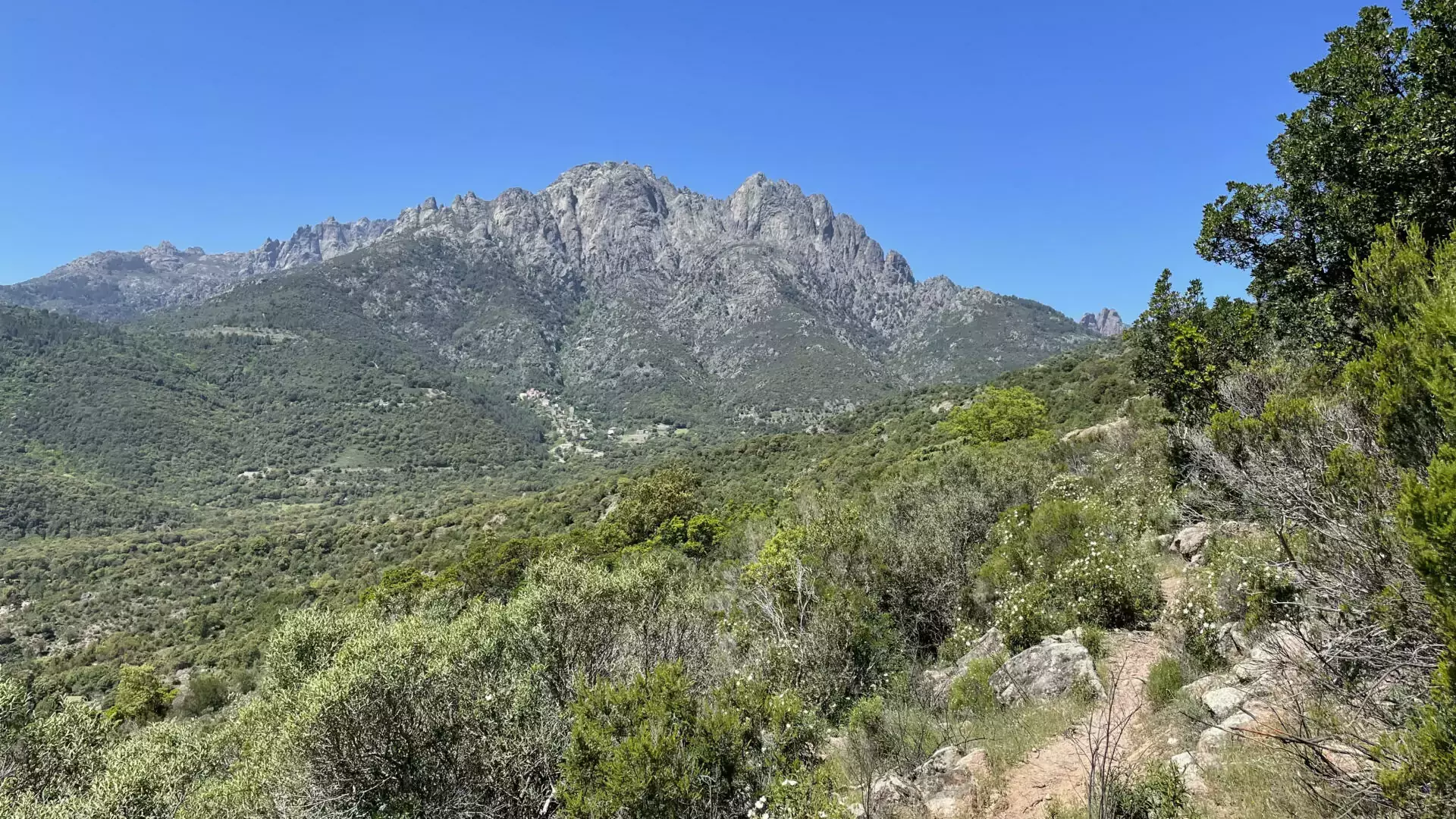
And then there is that view, thrilling, of the mountains overlooking the village of Popolasca. What a sight! Today, one reads everywhere the embarrassing French name of ‘Aiguilles de Popolasca’ to refer to that mountain called in Corsican “A Penna Rossa”. I am not sure of the accuracy of the proverb that goes with it. But often when we drove through Ponte-Leccia, my father used to say: ‘se A Penna Rossa casca, addiu a Pulasca‘. I let you deal with this easy translation.
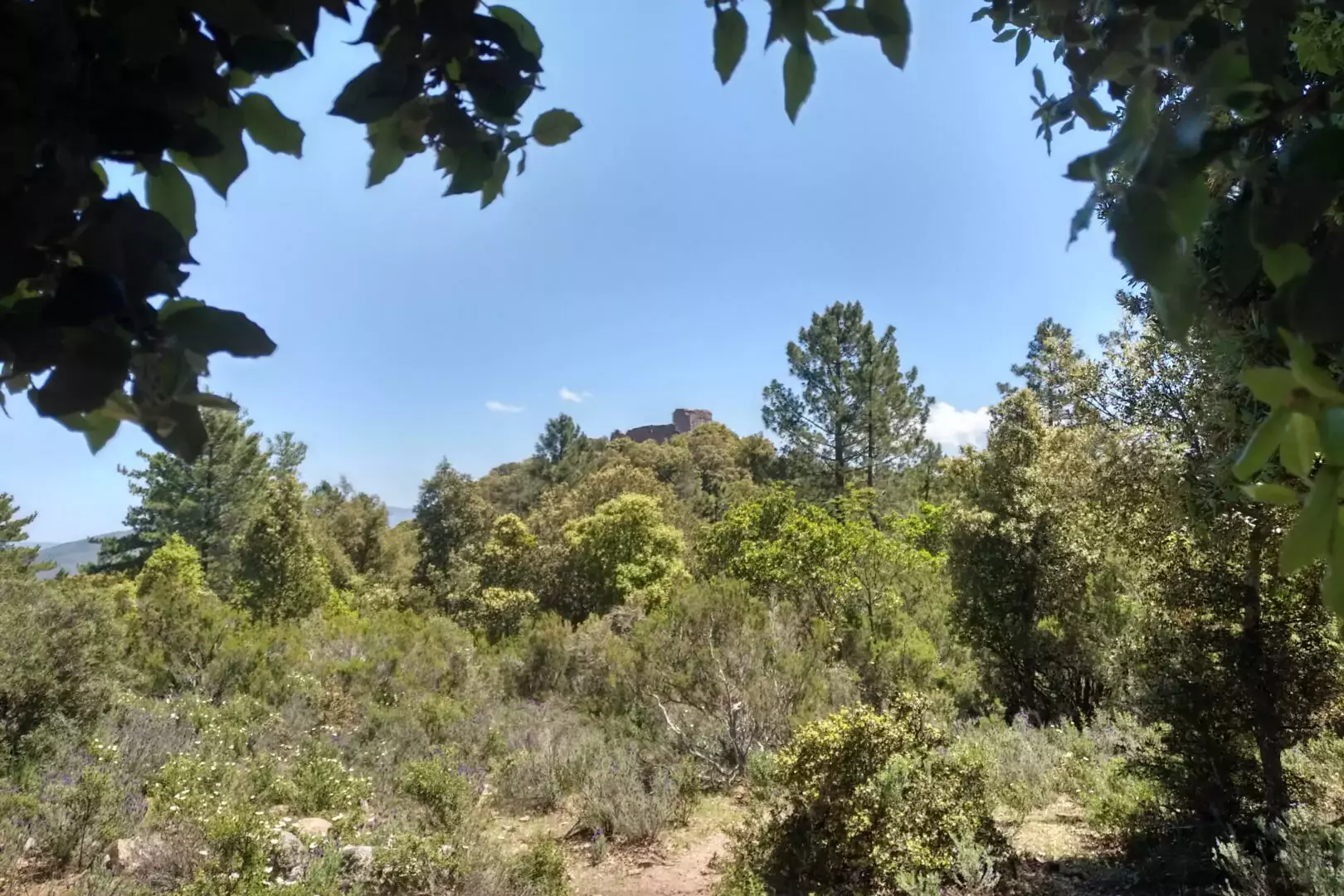
It takes a few minutes by car to find the first road sign for the starting point of the path to Serravalle Castle. We have a choice: either start from Piedigriggio or start from a point on the road to Popolasca. Either way, it will take a half-hour walk to reach the castle. For my part, I took the path that starts from the Popolasca road. Impossible to miss, it is clearly marked. The path is very clean (unfortunately not always the case elsewhere), and easy to walk. Ideal even with children.
However, one must be careful of two things. They may seem obvious but it costs nothing to point them out. First, the region is arid and it is strongly advised to avoid a summer walk in broad daylight. Shaded areas are rare. Then, in autumn/winter, it is recommended to inquire about days open for hunting. The place is often used by hunters, so it is obviously better to be cautious.
In Serravalle heritage meets wilderness
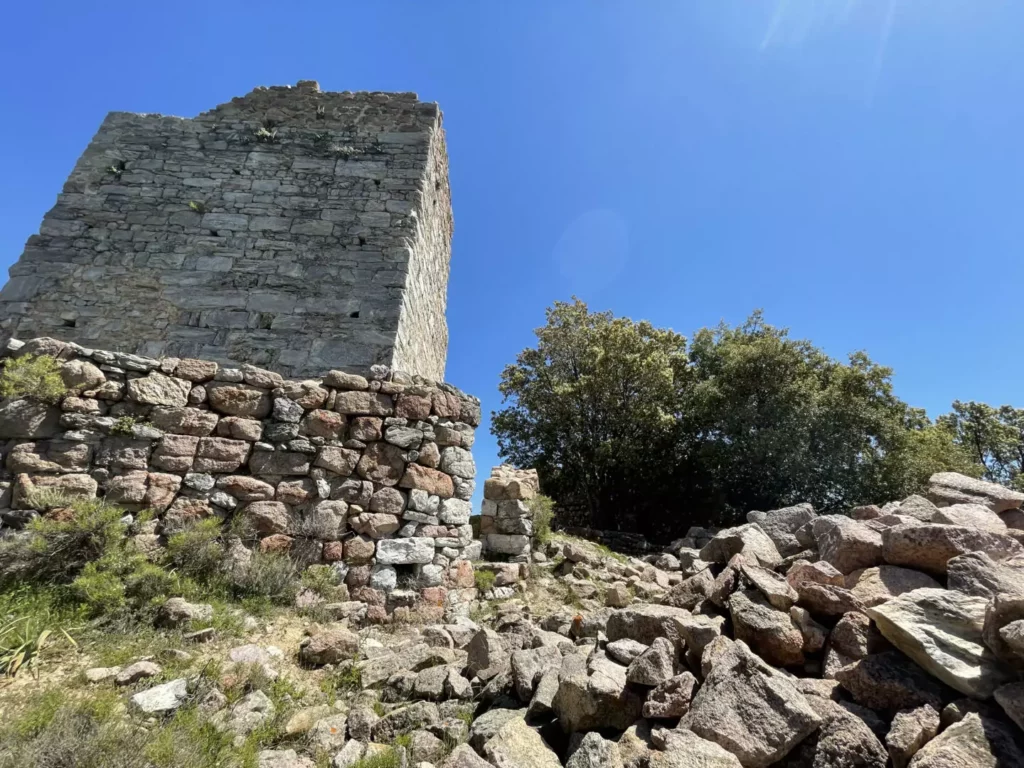
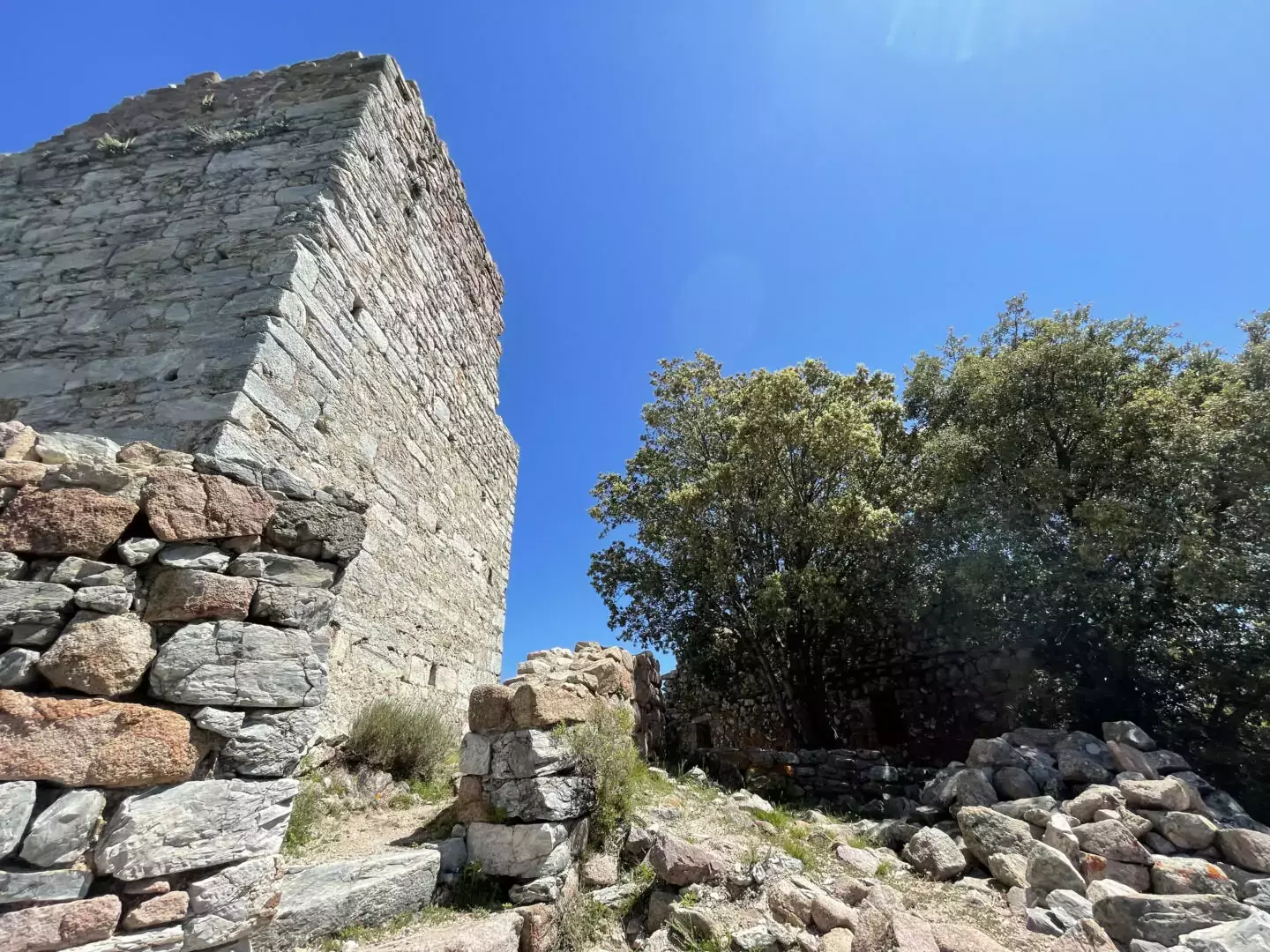
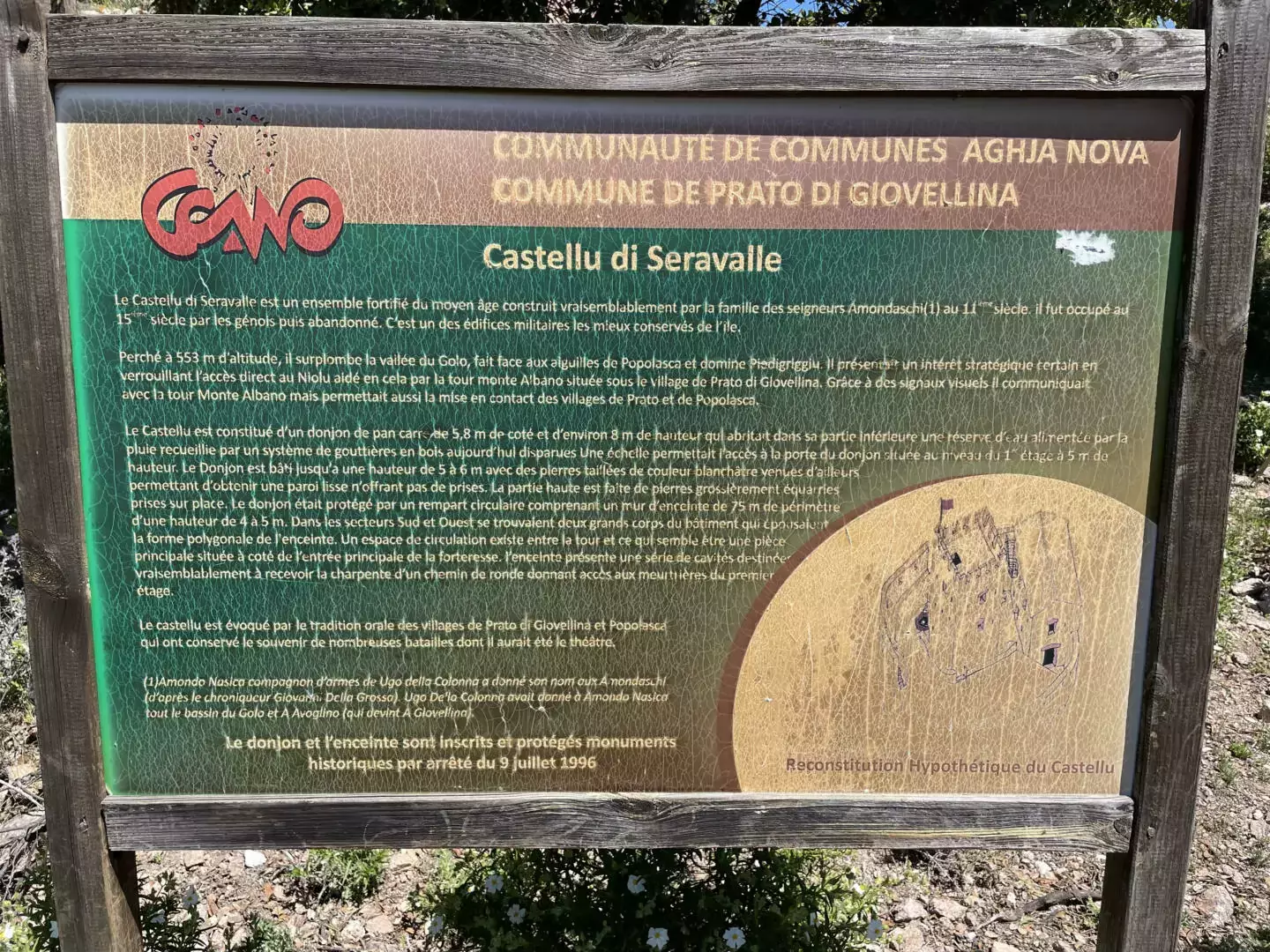
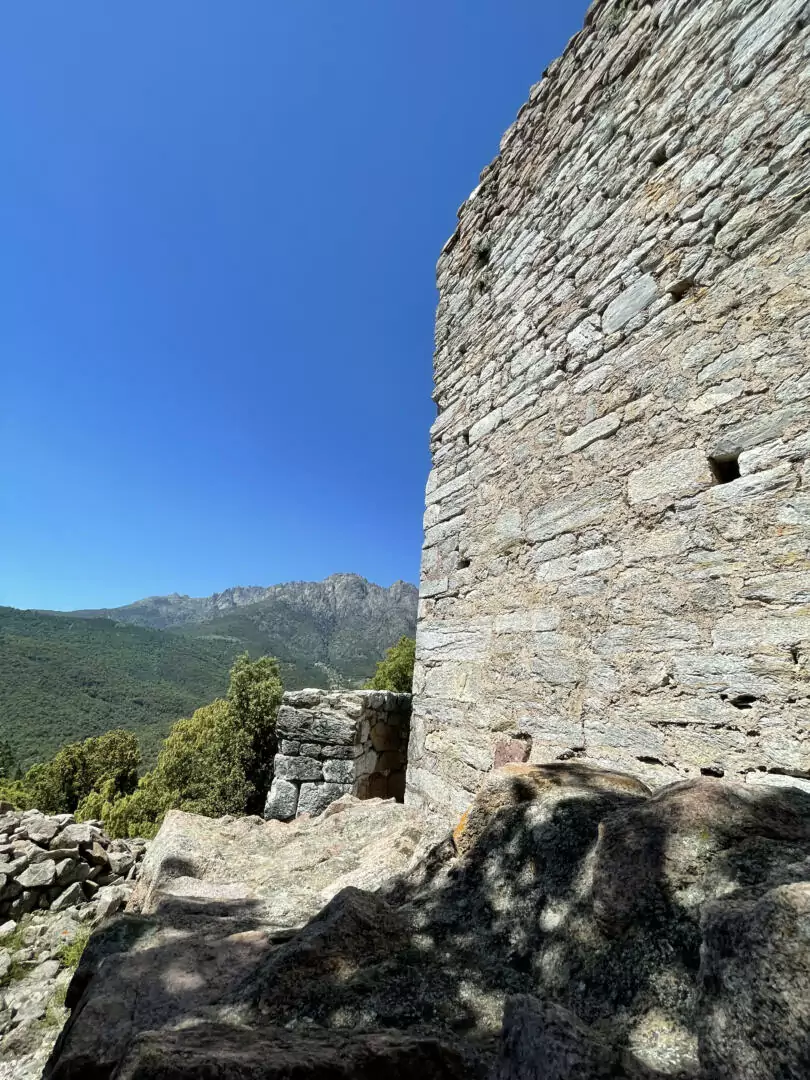
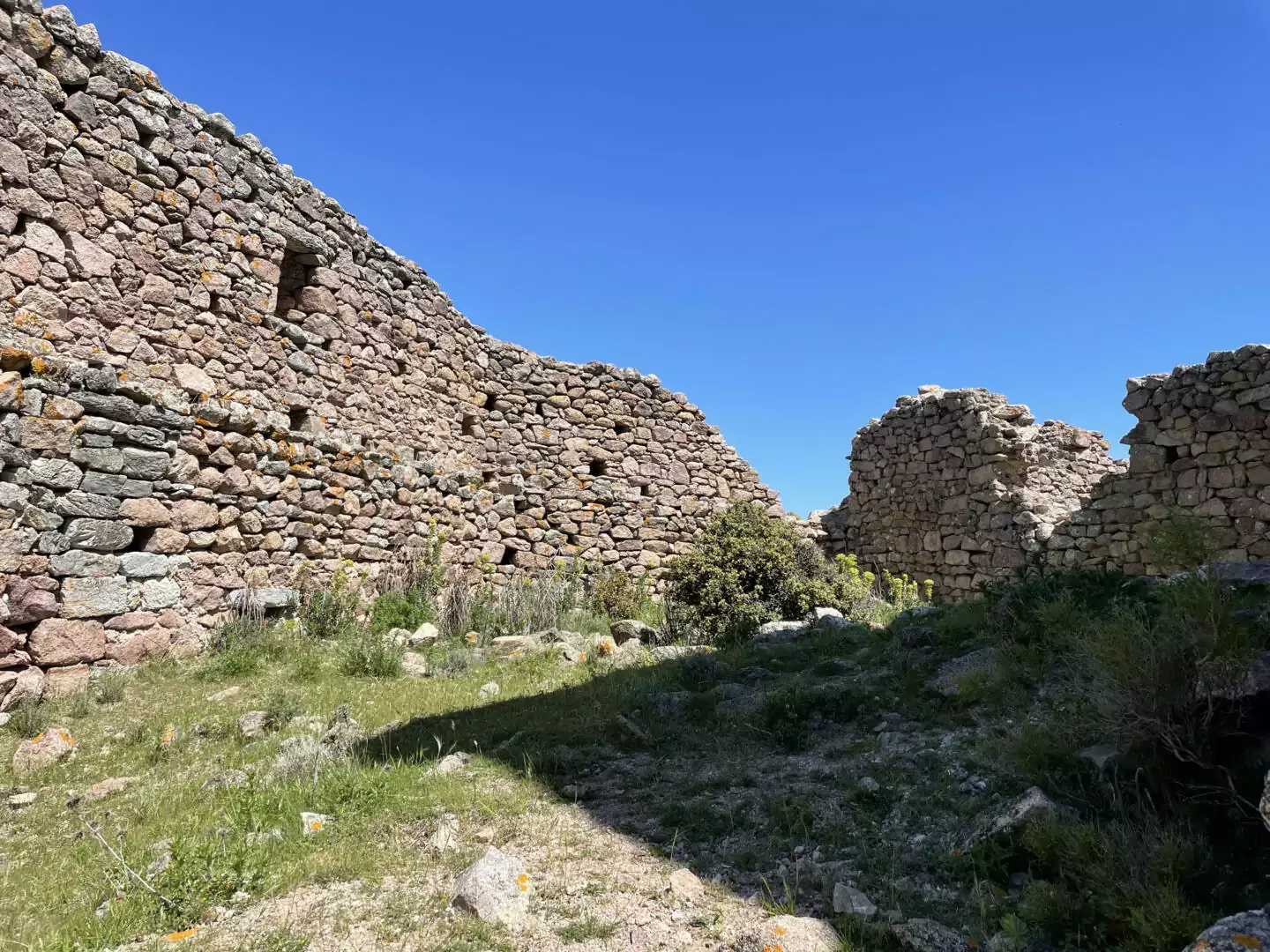
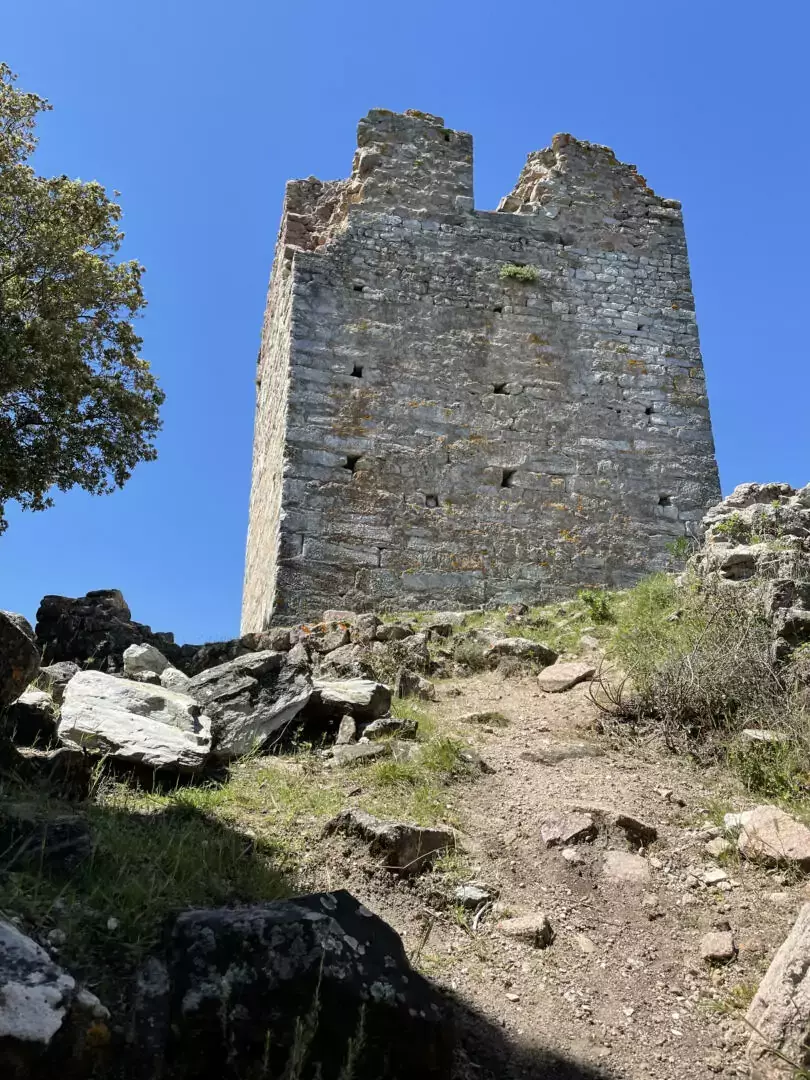
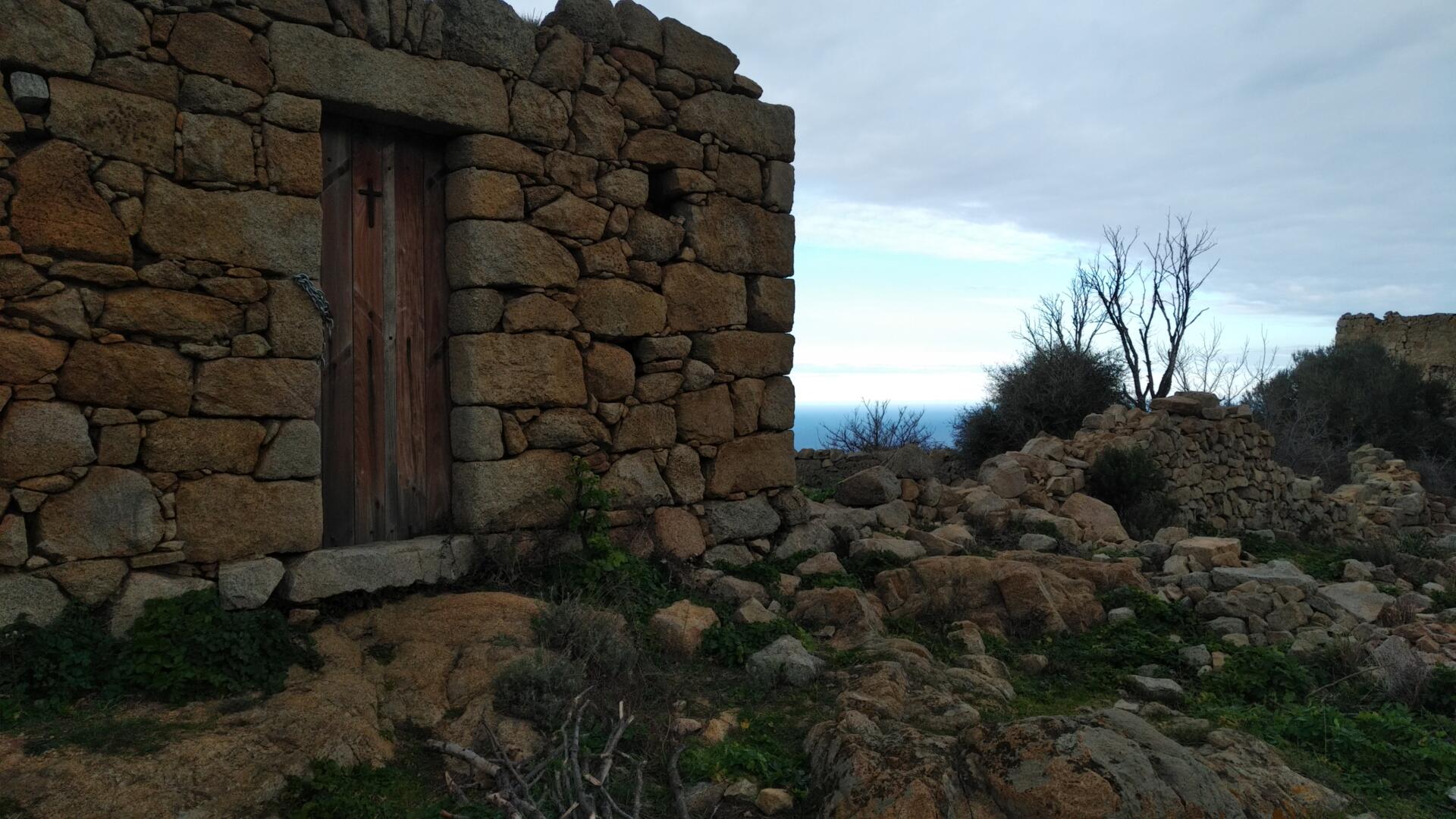
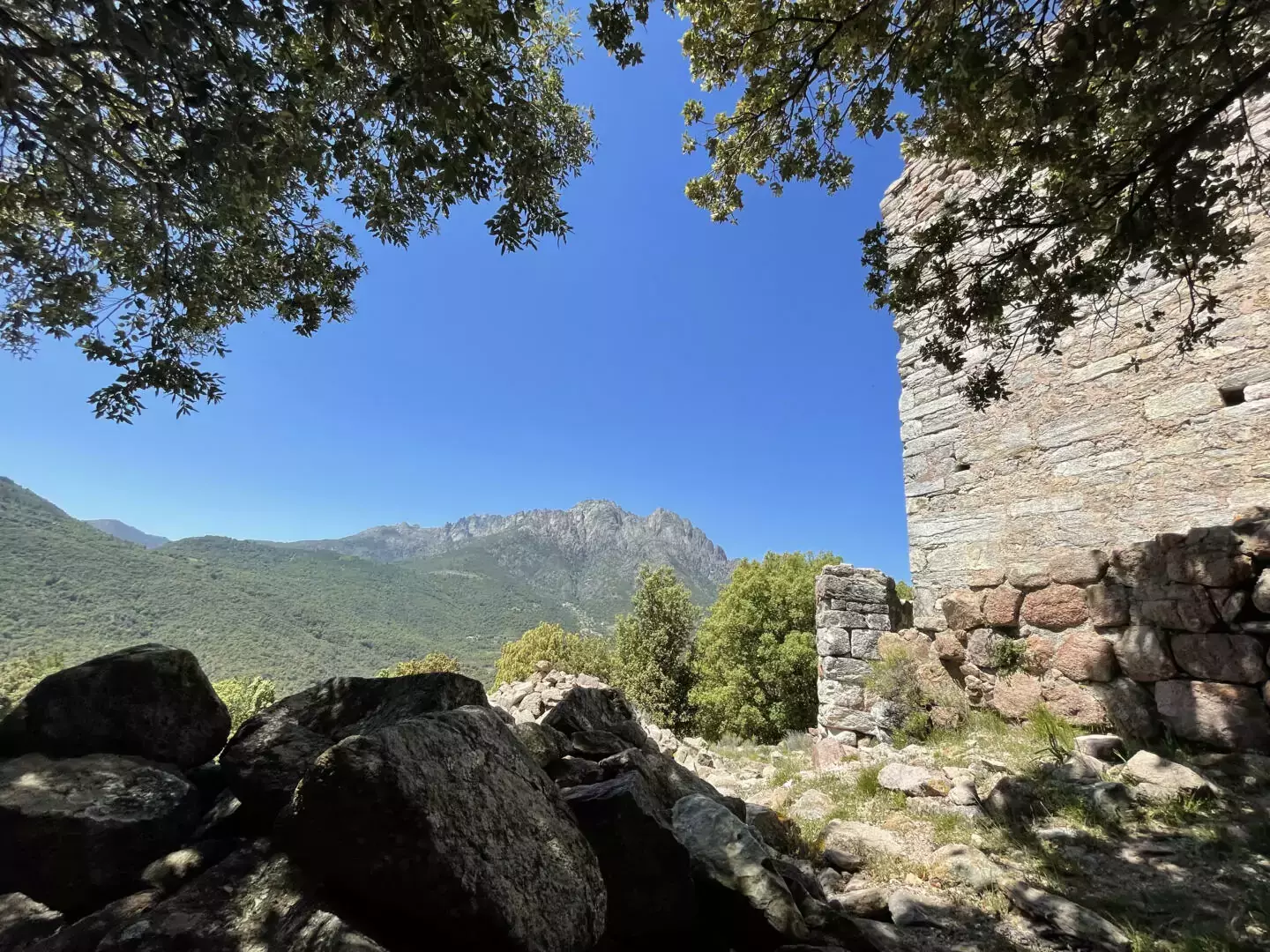
After a thirty-minute walk, you finally see Serravalle Castle. From the building constructed during the 13th century, possibly by the Amondaschi family (lords of the region at the time), part of the tower and walls of the complex remain. The castle of Serravalle was a modest fortress. But the vestiges of the Middle Ages in Corsica are not so common. So that castle is at least worth a look.
Its stones have an admittedly simple history (no major event is linked to that castle) and perhaps the pleasure of discovery holds above all to the site’s ability to be an invitation to observation. One imagines what it might have looked like centuries ago, one understands why it was built there. The view, whether towards Popolasca or Piedegriggio or the bottom of the valley, offers a great capacity for observation.
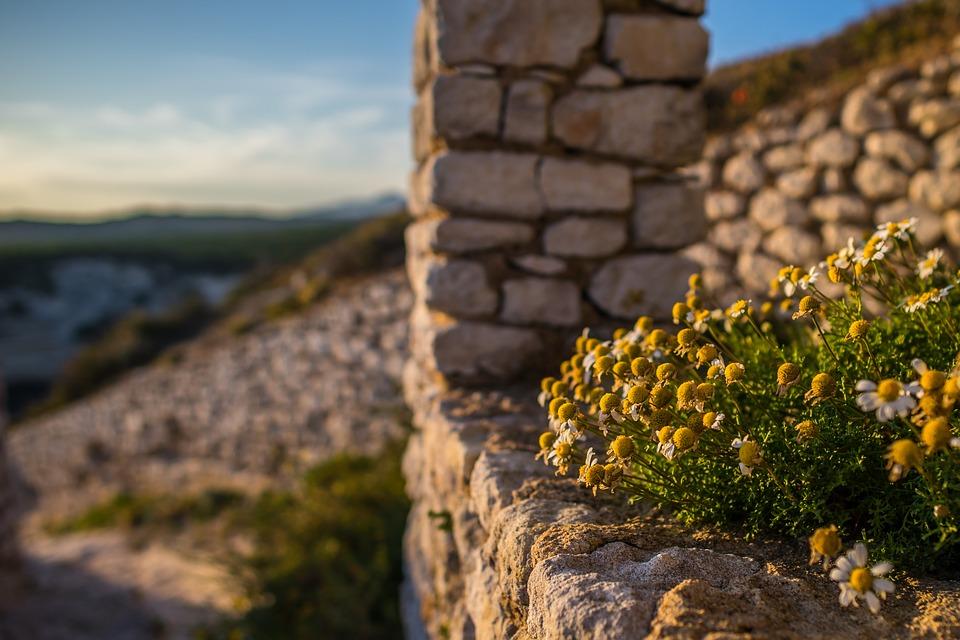
Castle of Serravalle in pictures
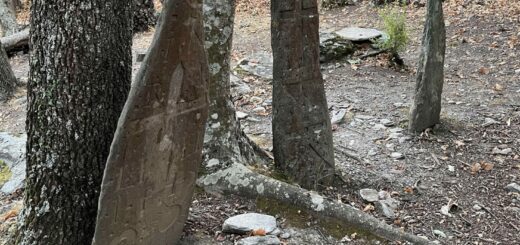
We share a few photos of that discovery, which we recommend to everyone. For nature lovers, for families who want to enjoy a leisurely walk. Especially for those who love old stones. Those who find a special pleasure in sitting in the middle of a piece of history and feeling the soul of places.