'/%3E%3C/svg%3E)
'/%3E%3Cpath%20fill='%23b2b2b2'%20d='M241%20382q0%2016%2017%2026%2017%2011%2042%2011t42-11q16-11%2017-26V269H241'/%3E%3Cpath%20fill='%239f7e00'%20d='M241%20379q0%2014%208%2023%209%209%2021%209%2014%200%2021-9%209-9%209-23V269h-59'/%3E%3Cpath%20d='M241%20339v-70h59v110q0%2014-9%2023l-6%205v-68h-15v72q-8%200-14-4v-68zm59%2040c0%2022%2015%2032%2029%2032%2021%200%2030-18%2030-32v-40h-59'/%3E%3Cpath%20fill='%239f7e00'%20d='M266%20277v5h2v12h-3v-5h2v-5h-9v5h2v5h-4v9h3v18h-5v10h34v-10h-5v-18h3v-9h-4v-5h2v-5h-9v5h2v5h-3v-12h2v-5zm42%20101q0%2010%206%2017%206%206%2015%207%2010-1%2016-7%206-7%206-17v-29h-43'/%3E%3Ccircle%20fill='%230044ad'%20cx='329.5'%20cy='372'%20r='6'/%3E%3Cellipse%20fill='%230044ad'%20cx='300'%20cy='340'%20rx='16'%20ry='21'/%3E%3C/svg%3E)
Sustainable Tourism in Corsica: Visiting Less, Understanding More
Sustainable tourism is often reduced to a few simple gestures: avoiding waste, respecting nature, choosing local products or travelling outside the busiest periods. All of these are important. But in a place like Corsica, sustainable tourism also raises a deeper question: what kind of relationship do visitors build with the territory they are discovering?
Corsica is not only a holiday destination. It is a living island, with villages, languages, landscapes, local economies, agricultural traditions, cultural initiatives and fragile balances between coast and mountain, summer and winter, residents and visitors. Tourism can support these realities, but it can also weaken them when it concentrates too much pressure in the same places, at the same time, for the same uses.
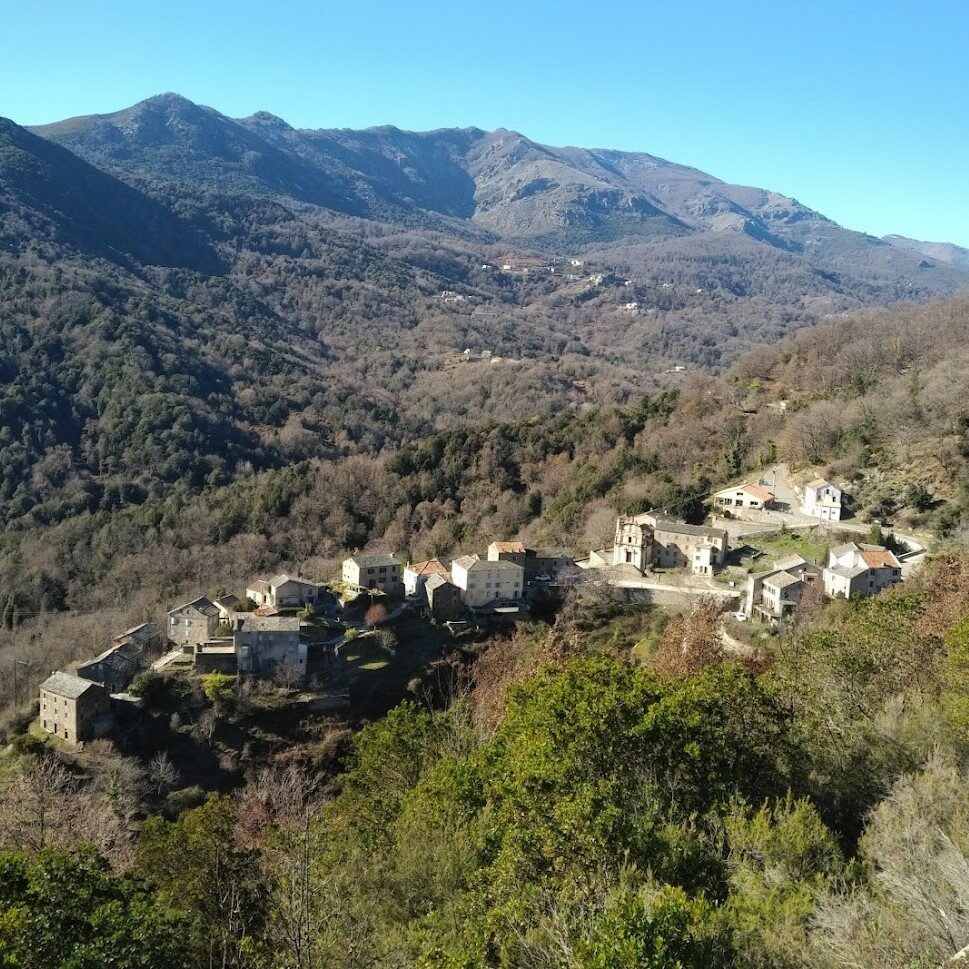
A more sustainable way to visit Corsica does not necessarily mean travelling less in a negative sense. It means travelling with more attention. Staying longer in one area instead of rushing across the island. Visiting a village not only as a viewpoint, but as a place where people live. Choosing local food not only because it is pleasant, but because it supports producers, know-how and short supply chains. Discovering heritage, museums, trails, crafts or community projects as part of the experience, not as secondary activities after the beach.
This approach also helps distribute the benefits of tourism more fairly. When visitors take time to explore inland areas, small cultural sites, local markets, family-run accommodation or lesser-known regions, tourism becomes less dependent on a few crowded hotspots. It can create opportunities for rural territories, cultural associations, local producers and small businesses that often work with limited resources but strong commitment.
For local project leaders, sustainable tourism is therefore not only an environmental topic. It is also a matter of organisation, positioning and economic balance. A responsible tourism project needs a clear identity, realistic financial assumptions, suitable partnerships, a readable offer and tools to manage its development over time. Good intentions are essential, but they become stronger when they are structured.
Corsica needs tourism that respects landscapes, but also tourism that understands people, seasons, distances, local constraints and cultural depth. The future of sustainable tourism on the island will not depend only on individual behaviour. It will also depend on the ability of local actors to build projects that are meaningful, viable and rooted in the territory.
To visit Corsica sustainably is not simply to leave fewer traces. It is to leave with a better understanding of what makes the island a living place.